Thursday, July 18, 2013

The End.

And another era comes to an end.

I will no longer be blogging here. It's been a beautiful run since 2009.

Fret little, though, sweet peas, I am simply moving to Tumblr (after much deliberation & for a variety of reasons).

You can follow me at:

http://underuroobasumbrella.tumblr.com/

Hope to see you there!

xoxo
Urooba

Sunday, July 7, 2013

"Poetry heals the wounds inflicted by reason." -Novalis

A couple of months ago, I had the best encounter on the bus. I met the most impeccably dressed man, with a full white beard & a large camera slung over his shoulders. Michael's birthplace is Lahore & his Urdu was infinitely better than mine - though he seemed to know every language under the sun. He shared his art with me - his photography & poetry. We bonded over ghazals & our shared experiences of animosity at the sight of of our physical experiences. "Peace bombs - that's what we artists make explode", he said. And the very next day he sent me a couple of poems (!!):

 m a s s . t r a n s i t . m a d e . p e r s o n a l

sometimes doves collide in mid-air
we found ourselves side by side
as the woods raced by in a multicultural blur
of Urdu, French and Spanish words alfresco

We peered into some photographs
looped writing gave the text
international relations grew warmer
and I'm wondering what is next

 g h a z a l s . a n d . g r i n s

a most delightful first meeting.
What a pleasure to share origins
as well as so many interests.
The yellow of embroidered satin
and your laughter most memorable


And today I am happy to report that after eons & eons I have managed to write some poetry of my own.

xoxo
Urooba

Monday, June 10, 2013

African (A Freakin') Good Time - Ethiopia 2013


“And then the muezzins call: beckoning the city’s sleeping populace with the shower of praise for an almighty God. There are ninety-nine of them within the walls of this tiny city - ninety-nine muezzins for ninety-nine mosques. It takes the culmination of the staggered, near-simultaneous beginnings of a hundred less one to create the particular sound that is heard as Godliness in Harar.”
pg. 2, “Sweetness in the Belly”, Camilla Gibb

This is how 6 AM looks in Addis.


That is how my day would begin in Addis Ababa, Ethiopia. The familiar Arabic verses would wake me from my slumber. A lazy smile would form on my lips, and I’d crawl out from under my covers after the last of the roosters too, finished cock-a-doodling. And a day of traversing through an African metropolis to meet with high political officials would begin.


Just about a month ago, I found myself conducting fieldwork in the Horn of Africa - an experience that was equal parts sensorially and intellectually stimulating. I spent two weeks with 3 professors and 18 other undergraduates researching an African security issue of our choosing. Here is my reflection of this account.

---

"I haven't been everywhere, but it's on my list."  
Susan Sontag

Whilst flying over and near cities like Baghdad, Tel Aviv, Damascus...I had the sudden realization of the realness of these places. Rather the realness of their politics, all simply because of associating myself with their geographies. Because their geographies and mine, in those moments, became one and the same. Essentially it was the thought, “Oh my god, there is civil strife occurring 30,000 feet below me” which spurred Foucault’s ‘heterotopia’  to mind, wherein he discusses spaces that exist outside everyday social and institutional ones. Foucault uses the concept of a mirror to explain heterotopia,


In the mirror, I see myself there where I am not, in an unreal, virtual space that opens up behind the surface; I am over there, there where I am not, a sort of shadow that gives my own visibility to myself, that enables me to see myself there where I am absent: such is the utopia of the mirror [...] it makes this place that I occupy at the moment when I look at myself in the glass at once absolutely real, connected with all the space that surrounds it, and absolutely unreal, since in order to be perceived it has to pass through this virtual point which is over there.”
Michael Foucault, Of Other Spaces (1967), Heterotopias


And I suppose that’s how I usually feel when I read about global issues (especially using virtual mediums. He predicted Twitter in 1967? Smart, Foucault ;)). But flying through the air, I felt that I had surpassed the ‘unreal’, that I no longer needed a mediator point to occupy the place where the realness of the politics of these cities was felt.


But my feigned experiences of the world can never supersede my longing to actually see all of of it, duh, considering I possess the rather generic desire of travelling the world. And this point was only reinforced during this trip to Ethiopia.


---

On First Sentiments
“It was early, but the city was already in second gear. We passed toothless old women and shrunken old men and expressionless Sufis clinging to the edges of their wool blankets, and neatly groomed men with short beards and knit skullcaps, and clusters of veiled teenage girls with fits of the giggles, and snotty-nosed children who ran up and touched me, shouting “Farenji! Farenji!” and round, oily mothers standing in doorways with babies on their hips...”
pg. 51, “Sweetness in the Belly”, Camilla Gibb


On one of our first days in Addis Ababa, our wonderful guide Abraham took us to the ‘mercato’, or market, the largest outdoor one in Africa. To say it was a sensory stimulation would be an understatement. The first of my flashbacks to the year I spent in Karachi, Pakistan when I was 8 happened here. The donkeys, the goats, the heat, the stalls, the vendors, the cars, the noises - both human and machine, the smells. I remember writing,


I smelled Ethiopia as soon as I stepped out of the airport. Its scent has stuck with me since and now being attached to it are memories. Nostalgia forms like this. Mix in the hot but pleasant sun and you have a recipe for African good time.


---

“The stars had only one task: They taught me how to read. They taught me I had a language in heaven and another language on earth.” 
—Mahmoud Darwish


On Interaction with Locals
Our main purpose in Addis was to have interviews with ambassadors and the like, so our interaction with locals was kept to a minimum. However, on the way to the Debre Libanos Monastery, we stopped at a marketplace in a town called Ch’ancho and that’s where I met 17-year-old Yordanness. She was the sweetest and our conversation was equally saccharine. It made me think about language - its capacities, its limitations. The reason we were able to converse was because we could both speak English. But as I’ve discovered growing up as a Muslim, the Qu’ran’s essence, for example, is lost in translation from its original Arabic. Poetry almost always loses something in translation. As Susan Sontag says in ‘The Aesthetics of Silence’“...language is the most impure, the most contaminated, the most exhausted of all the materials
out of which art is made.” Which is why it was also terribly difficult to gather “my trip to Ethiopia” into this blog post. Interpretations are folly but that is often all we have. There is beauty, however, in this chaos - the beauty of choice where we “have the chance to demonstrate either cowardice or integrity in every moment” (M.G.). And Yordanness ended our encounter with the most integrous of sentiments - regret at being unable to leave me with a parting gift, though we had known each other for all of twenty minutes.


Yordanness and I.

The Debre Libanos Monastery.


---


On Typical Narratives of Africa, Avoiding the Pitfalls of “Othering”, and Privilege
Prior to the trip (and heck, after it too, now) when I told people I was going to Africa I was quick to blurt out “But not for a humanitarian trip, etc. etc.!” Well actually later I started saying this with more sarcasm than Daria ever dared. Also prefaced it with quips of “Africa, the country I’m going to.” Ironically, we ended up on the same flights both ways with a group also travelling from Canada and who were with Habitat for Humanity. In two weeks, after we had conducted all of our field research, *they had solved all of Africa’s problems. (*Wry humour courtesy of my professor).


Also, while in Ethiopia, I never took photos of any locals without their permission, because the last thing I wanted to do was frame my photos in such a way that I was documenting an "Other”. I know ‘Othering’ all too well, heh, and it ain’t a pretty thang, friends.


These cuties posed for the camera all on their own, aw!


And I was prepared for the fact that I would feel extra-privileged during my time there. We stayed in a multi-starred hotel. We had three meals a day that cost next to nothing (for us). We traipsed in markets and bought trinkets and such for the sake of buying trinkets and such. We had ample access to clean, bottled water. We had a buffet dinner at the Sheraton in Addis, which was so extravagant, had such a colonial aesthetic, and was such a contrast to the rest of the city that it made me physically uncomfortable. (But I gobbled down my lavish dinner and dessert with great ease. Is this cognitive dissonance a microcosm of the problem of human society and/or nature? I wonder, I wonder...). Still, while this would probe *a lot of people to flesh out tired old narratives that are based on feeling sorry for the poor, and that would lead to well-intentioned but misguided efforts to find “solutions” and “help”...I left with a much different impression (also helps that I recognize this is a tired, old, haggard, dying, on-its-death-bed-and-so-damn-lethargic narrative). That people of varying socioeconomic backgrounds, all of which I saw in the parts of Ethiopia I visited, all make it work. That even those so far below on the rungs of the ladder of the privileged, have a livelihood. And that when we went south of Addis, into rural communities, smiles were abundant. Especially those on the lips of children, who would race with pure, unadulterated joy to our mini-bus to wave at us as we passed by. (& so then I had cheesy reverberations of “Everyone smiles in the same language!” ring in my head...damn you, grade-school posters.)


*sorry for being so frkn general


Traipsing in markets.

---

Our Research
“Ten years ago Ethiopians had no word for diaspora, nor emigration. There was only the word for pilgrimage, a journey with an implicit return - to Mecca or the shrines of beloved Ethiopian saints - but the idea of leaving your country, except for a very educated few who sought higher degrees abroad, was incomprehensible. A betrayal even.”
pg. 35, “Sweetness in the Belly”, Camilla Gibb

My group focused on intra-African migration and used Zimbabwean migrants to South Africa as a case study. My interest in the topic of migration prior to this research process was informed by following the news and events surrounding migrant justice from the local chapter of “No One is Illegal”, an organization rooted in realizing “anti-colonial, anti-capitalist, ecological justice, Indigenous self-determination, anti-occupation & anti-oppressive communities.” It also stemmed from following the debate surrounding U.S. immigration policy and reform, where undocumented migrants are often associated with racist politics.


When we began writing the proposal, due to our group’s divergent interests, we agreed to approach the issue with balance - of a human and state security perspective. When we divvied up research tasks, I therefore chose to focus on the human security aspect. This led me to explore Zimbabwean migrants’ experiences with xenophobia and the role of civil society in mitigating their negative experiences in South Africa. In our proposal, we focused on our case study a lot, and since I was primarily exploring our issue through the lens of migrants’ lived experiences, and the inability of the state to manage or better these experiences, I perhaps held more antagonistic sentiments towards the government of South Africa and their approach. However, insights from our field research implored us to ponder questions such as: is the influx of migrants that South Africa has experienced solely their responsibility, considering it is largely by virtue of their geographical location that they have experienced it? Should the onus be solely on them to deal with this influx if they lack the political capacity or the financial resources to do so? These questions and the opportunity to speak to a diverse group of ambassadors - African, North American, European, etc. - led us to explore the extent of involvement of other actors in dealing with the issue of intra-African migration. A perception of migration from African diplomats was that it is a positive (and inevitable) occurrence in terms of economic development. This and the reluctance or lack of knowledge to speak to the negative aspects led us to discover that migration is often not a policy priority. This also led us to uncover some of our biases and perceive the issue in a broader way, diverging from viewing it simply as a security threat. We began to implore the implications of mixed migration flows, which we began to see is what generally occurs within the African context.


Our first indication that this issue is far more complex than we had originally perceived was when we discovered the way intra-migration is generally thought of by African diplomats, as mentioned above. Many reiterated the concept of Pan-Africanism, and on the topic of African migration this included the movement of peoples between borders as being inevitable because boundaries in Africa have been artificially demarcated and certain ethnic groups, for example, can be found across said boundaries in Africa. At the same time, implementation of  protocols and frameworks surrounding migration (both international and by the AU) have been left up to member states in order to respect state sovereignty. Thus the concept of sovereignty both produces a cognitive dissonance of sorts when it comes to the concept of Pan-Africanism, and poses as a major obstacle in implementing frameworks. Farther, speaking especially to non-African officials and gaining a deeper understanding of the complexities and dynamics of African politics, we began to uncover why implementation of these frameworks is a challenge. Sovereign states may not have the financial resources, political capacity or even political will to manage migration. The fact that migration is often not considered high politics (unless it involves a security threat surrounding transnational rebel groups, for example) also poses a challenge. Finally, most people are uninformed about migration because categorization is confusing and complicated. It’s difficult to understand these paradigms and how they are interrelated.


I learned that a lot of the time, what diplomats don’t say is useful. As mentioned previously, the hesitation on part of African diplomats to talk about the negative repercussions of mass migration led to a lot of insights. Our discovery, too, that migration is not a top policy priority and the fact that many therefore could not speak to it the specifics of it, helped us uncover some of the challenges with managing migration.


On the other hand, however, talking to officials, we were constantly aware that their answers had an agenda. Even when we spoke to an international NGO we are aware they are funded by the EU, so we can never truly know the ramifications of such a situation. Finally, speaking only to experts means that we were bereft of public opinion of our issues.


Overall, one of the biggest takeaways for me from this experience, from an academic perspective, has been learning about the research process - I can now finally understand why it’s not so necessarily finite! It will definitely affect how I’ll approach being a student of the social sciences from now on. I am leaving this course with far better research skills, the realization that migration studies is all-encompassing and that I would love to keep learning more, and finally the desire to continue staying on top of contemporary African politics.


My research group and I.


Our entire class and I (minus our "main" prof) in front of the African Union headquarters (!!).


And as for the experience of travelling, I think Mark Gonzales puts it the best when he says:
“I was raised with the belief that those who travel have an obligation to the regions they journey to, not vice versa. Often I reflect on what a different world this would be if more us shared in that perspective.
One day we will abandon this addiction to spectacle-based paradigms & tourism travel. On that day, new ways of conversing will begin. For the world is not only playground, it is also a cemetery, a cradle, & the place where homeless dreams lay their head.
May you travel often, & when you do so, let it be not for souvenirs, but to cultivate love & amplify dreams.”


xoxo
Urooba

Sunday, April 14, 2013

Poetics & Politics

Cravings for solitude are supplemented by my realization this year that there has been a lack of salience within my relations with others. This has exacerbated feelings of existential nihilism within me. But there are ebbs & flows within this paradigm. It's certainly not conclusive, nor is it a replacement. It's like how when palm fronds become wet when beaten with pouring rain during a tropical storm, but that which the very next day are dried under a hot sun. 

"Wrong solitude vinegars the soul, right solitude oils it.
How fragile we are, between the few good moments."
Jane Hirshfield, Vinegar and Oil

It's during these 'oily' moments where I discover, for example, that I want to sit under the sun for hours and watch Frida Kahlo paint while I swish around on her terrace in her one of her many maxi skirts. 

So the next best thing is to don a swishing maxi skirt. Channel my inner Frida Kahlo.

"I used to think I was the strangest person in the world but then I thought there are so many people in the world, there must be someone just like me who feels bizarre and flawed in the same ways I do.

I would imagine her, and imagine that she must be out there thinking of me too. Well, I hope that if you are out there and read this and know that, yes, it’s true I’m here, and I’m just as strange as you." 
Frida Kahlo

WHO WHAT WEAR?
pleated skirt, U0, $10
ruffled coral button-upshirt, Mintage, $6
sequinned vest, Mother's from the 80's
gold & green earrings, gifted, from Abu Dhabi

And in these moments you discover that poets are your long-lost friends. Each word is a reminder of this camaraderie, of this understanding.

loss.
-
"your email says
i feel like a loser a lot,
like i’ve lost.
i think about all the things i’ve lost
weight, lovers, memory, dignity, time, self respect and people 
most of all i lose people
to prison, to ghosts, to the ground
to a changed phone number
to a nothing that meant everything.
i start to count loss with my fingers
the summer we lost our home
and last year, 
my pride
my innocence and my milk teeth in the same winter
my father, my brother
my country, my accent.
the television tells us that we have to ’let go’and i do.

even my secrets   
i lose to poems."
—Warsan Shire

It is only natural to wear your feelings. Mine take the form of sequins, feathers, geometric prints, faux leather, gemstones, and colour. At once.
WHO WHAT WEAR?
blue sequinned chopped leotard, F As in Frank vintage sale, < $2
colourful geometric-print pleated skirt, thrifted, $6
feather earrings, Aldo, $7
faux-leather tights, Silence + Noise, $10
blue pumps, thrifted, $3
bag, UO, $10


Finally, twenty years of existence, and the last few under the influence of a certain set of politics and poetics, can only make one yearn for a "connection with someone that isn't predicated on aesthetic ideals."(https://disquietblog.wordpress.com/2012/11/12/you-cant-hurry-love/)


But then there is this wonderful reminder
"We mustn't be in love with the ritual of love."
—Vivian Gornick
As someone whom I deeply admire has put it, we instead "must cultivate healthy solitude & healthy love of self."


 ♥ ♥ ♥
Drop me a line, so I can add things to The Summer Reading List, lovers.

Friday, February 1, 2013

Formal Introduction

I don't do well with formalities but I'd say I do adequately enough with formal wear.


*These last two purple & yellow outfits were worn to my cousin's wedding shenanigans. The "who what wear" follows in a similar fashion to the hot pink & white outfit's one. 

{inspiration of the last little while}:

1. One of my favourite stanzas from one of my favourite poems from one of my favourite poets:

“...this thought keeps consoling me:/though tyrants may command that lamps be smashed/in rooms where lovers are destined to meet/they cannot snuff out the moon/so today/nor tomorrow/no tyranny will succeed/no poison of torture make me bitter/if just one evening in prison can be so strangely sweet/if just one moment anywhere on this earth.” 
- فیض احمد فیض (Faiz Ahmed Faiz, “A Prison Evening”)


2. This excerpt is always pertinent:


"There is no poetry in this / There are causes & effects / There are symbols & ideologies / Mad conspiracy here, & information we will never know / There is death here, & there are promises of more / There is life here / Anyone reading this is breathing, maybe hurting, but breathing for sure / If there is any light to come, it will shine from the eyes of those who look for peace & justice after the rubble and rhetoric are cleared & the phoenix has risen 
/ Affirm life
/ Affirm life
/ We got to carry each other now / You are either with life, or against it
Affirm life.”
- Suheir Hammad, 'First Writing Since'


3. The current playlist:


All in all, just living the twentieth year of life, in this 13th year of the new century.
xx

Sunday, November 11, 2012

Artivism.

"I started to write about how when I was in college, I had one group of friends who were ARTISTS and another group who were ACTIVISTS, and the two didn’t mix at all. If you loved art, then you were frivolous and wild and funny and irreverent and provocative but in a way that was solely about the making and creating and consuming of art; and if you were an activist, you were serious and angry and you liked reading boring, constipated, jargon-y academic books about ISSUES like RACISM and SEXISM and QUEERNESS and OPPRESSION, and there was no time for the frivolous, superficial world of art; even though in my heart, I knew that the two had to go together, that  it’s impossible to make meaningful art without being interested in the world beyond the one you know, and part of wanting more humanity in the world is deciding that art is meaningful and that all people should have the right to access and create it."

- from {http://rookiemag.com/2012/10/literally-the-best-thing-ever-m-i-a/}


I love this quotation. It's not too hard to see that that art and activism are not mutually exclusive. In fact, I was introduced to the latter through the former; specifically, anti-war/occupation activism through spoken word. As such, this resonates with me tremendously. 

It makes my anti-oppression heart go vroom-vroom.

Sunday, October 28, 2012

20 Acts of Groovy

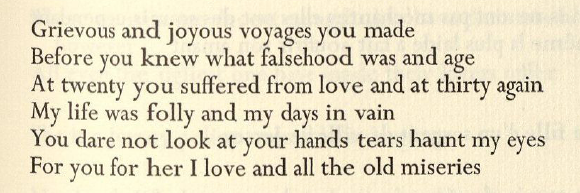
                                                                         Guillaume Apollinaire, from “Zone”; trans. Samuel Beckett

It was after my parents threw me a relatively grandiose high school graduation party when I decided I would never like to receive gifts on my birthday again. Upon first glance of this sentiment you may presume that I hoard unchecked privilege and was thus supremely dissatisfied with the presents I had received. 

Not quite so.

Sure, I was now the primary care-taker of a few too many satchels that I would later pass on to my mother and grandmother; and sure, guests felt it an ethical decision to buy me jewelry sported by most of everyone else (heh); but for the most part I held little animosity towards what I had actually received. Rather, I felt like an instigator of gluttony. In short, the presents were superfluous. I think that at the age of seventeen I had my first genuine brush with altruism - I did not need all those material goods. They'd be cycled into the crevices of my daily life, and submerged in routine, their novelty would wear off very quickly.

Like Marshall Sahlins says in his 1972 essay "The Original Affluent Society", there are two possible courses to affluence: a) producing much or b) desiring little.
He also said:
It is not that hunters and gatherers have curbed their materialistic 'impulses': they simply never made an institution of them....We are inclined to think of [them] as poor because they don't have anything: better to think of them for that reason as free. 
I am radically far from desiring little; be it known I desire everything from meaty burritos at 4 am for no good reason, to q-tips when I feel ear wax tormenting my auditory cavities in the middle of something important. Still, this resistance of sorts carried through to this year and hovered in my mind as it came time to plan a celebration of sorts for my twentieth birthday. It wasn't till I watched this video, though, that "Urooba's 20 Acts of Groovy" became a conception.

I definitely don't cry easily but, man, my tear ducts were in overdrive when I first watched this about a month ago on a regular September evening. "20 Act's of Groovy", then, became a list of 20 things I vowed to do on my 20th birthday. With the vital input of friends, The List was: 

1. Write a thank-you note to my floor's janitor. 
2. Write a letter to someone I haven't talked to in over a year. 
3. Buy food for the person behind me in line. 
4. Go to the UBC Hospital & give someone flowers/chocolate. 
5. Bake cupcakes & give them to random workers, etc. 
6. Leave interesting facts/warm fuzzies around campus/transit/lecture halls/hoods of parked cars. 
7. Donate blood. 
8. Plant a tree.
9. Buy a meal/clothing for a homeless person and sit with them and talk to them. 
10. Donate to Landesa http://www.landesa.org/ Or maybe Kiva.org? 
11. Write a letter to my future self. Perhaps 40th self?
12. Buy flowers/write a card for a parent waiting at the Children's Hospital.
13. Write a thrifty-fashion-love-yo'-self manifesto to share with peepz. 
14. Go to a restaurant, find a person who is eating alone, sit in front of them and go "Sorry I'm late, but you look amazing tonight." 
15. {on the weekend} make a meal/bake treats for the famjam.
16. Get flowers delivered for Mummy.
17. Go to the public library and slip notes in all my favourite books. 
18. Write a letter to my future significant other. (hahahaha) 
19. Tell a professor I really enjoyed their lecture. 
20. Write poetry at Wreck Beach.

As of today, I've been only able to do a fraction of these, however fear not, this means good cheer will spread over the course of more than one day! To keep the momentum going, I had also created "pledge" forms - slips of paper given to those I had done acts of kindness to, involving the promise of a good deed to be passed on to someone else. The sustainability of this initiative can also be exemplified by friends telling me they want to do this for their birthday, yeeeehaw!

Many delightful things occurred on the anniversary of the day I came out of my mother's womb, including:
1) A midnight visit by approximately 1483498 people, who crammed into my teeny chambers:

2) A friend who pulled me out of class to surprise me with cake and a rose, with as much vigour and pomp (re: swag) that my now-20-year-old body frame could take.


3) The pleasantly-surprised reaction of this bus driver who I presented a tulip to & which was captured SO PERFECTLY & unbeknownst to me by a friend:

For all other happenings of the day, there is no photographic evidence; they shall be etched in my 20-year-old brain, howevs. 

The most profound moment of the day however, had to be when I attempted to complete #4 on The List: Go to the UBC Hospital & give someone flowers/chocolate. 

At promptly 4 pm, I staggered over to the florist on campus & bought about half a dozen tulips. I attached notes & quotes to them, like so:

With a friend in tow, I ventured over to the campus hospital. Upon discovery that there aren't many patients there during the day, we decided to head to closest hospital in the city. Choosing a specific unit was a process, but we decided to hand out our flowers at the cancer agency. We learned, though, that that building had been closed off due to the spread of a contagious gastro-intestinal illness. 

We then headed towards the main building, vouching for the input of the lady at Information. [word-for-word accuracy is not guaranteed]

"Hi, we were wondering if we could deliver flowers to patients?" I inquired.

"Sure. What patient are you looking for?" she asked.

"Oh, no one in particular. We have several flowers and notes we'd like to hand out."

"Oh wow, that is so nice! Um...hold on, um...let me check where you should go."

After a phone call, she turned to us, "The sixteenth floor would be the best place!" She gave us directions of how to reach there. 

"Good luck and thank you!" she called after us.

We arrived on the sixteenth floor. We had forgotten to ask what kind of patients this floor held, but after having attempted to do this deed several times, we were eager to begin. We walked up to the receptionist, told her our purpose, and asked her what room we should begin with.

"Uhhh, this floor? Um. Well, let me think. Uh. Well, you can give them to Eileen just over to your left there. But, uh, I think that would be it on this floor."

We were a little confused at this point; the act of handing out flowers to strangers is generally perceived as something positive. Why had the receptionist's tone been so...unenthusiastic?

We walked towards Eileen's room. Naturally, I was frightened by the tiny dog that lay at her feet, who we learned was named Cookie. After chatting with Eileen for a bit, we handed her a tulip. She told us she was able to go home next week; we shared in her elation.  

After having said goodbye, we proceeded to walk down the hallway again and stumbled upon a nurse. We wanted to continue delivering flowers on this floor after such a great first experience with Eileen, and thus prompted her to tell us where we could go next.

She had the same cautious tone as the receptionist. 

"Uh, on this floor? Um. Let me see. Uh, perhaps this room to your right? You could see if she'd like that. But she may not be able to respond."

"Oh, okay, we could certainly try", said my friend Aysha.

As we were beginning to head into the direction of her room, the nurse asked us, "You ladies do know what floor this is?"

"Yes, the palliative one; we saw the sign when we got here," I answered.

"Okay. Do you know what that means?"

Me and Aysha shook our heads. A moment of silence passed.

"What does it mean?" Aysha inquired.

"Palliative...It essentially refers to those who are...waiting to die."

My and Aysha looked at one another, wells of tears forming in both our eyes. My thoughts immediately traced themselves back to Eileen. Eileen, who was excited to go home in a week. 

We left the floor immediately thereafter and continued to hand out our tulips to hospital staff: volunteers, nurses, doctors. 

***

On the twentieth anniversary of the day of my birth, I had witnessed what lies diametrical to birth: death. Rather than ruminate over the implications of this, I was instilled with the cognizance of why 20 Acts of Groovy was so important to me.  It couldn't have come at a more appropriate time in my life, where with the advent of so many perspectives, one entertains different philosophies each day and night.

I can already tell my twenties will be an epoch of epic [self-/]discovery.